




 Bestselling Author Freida McFadden Reveals Her True Identity






8 min read


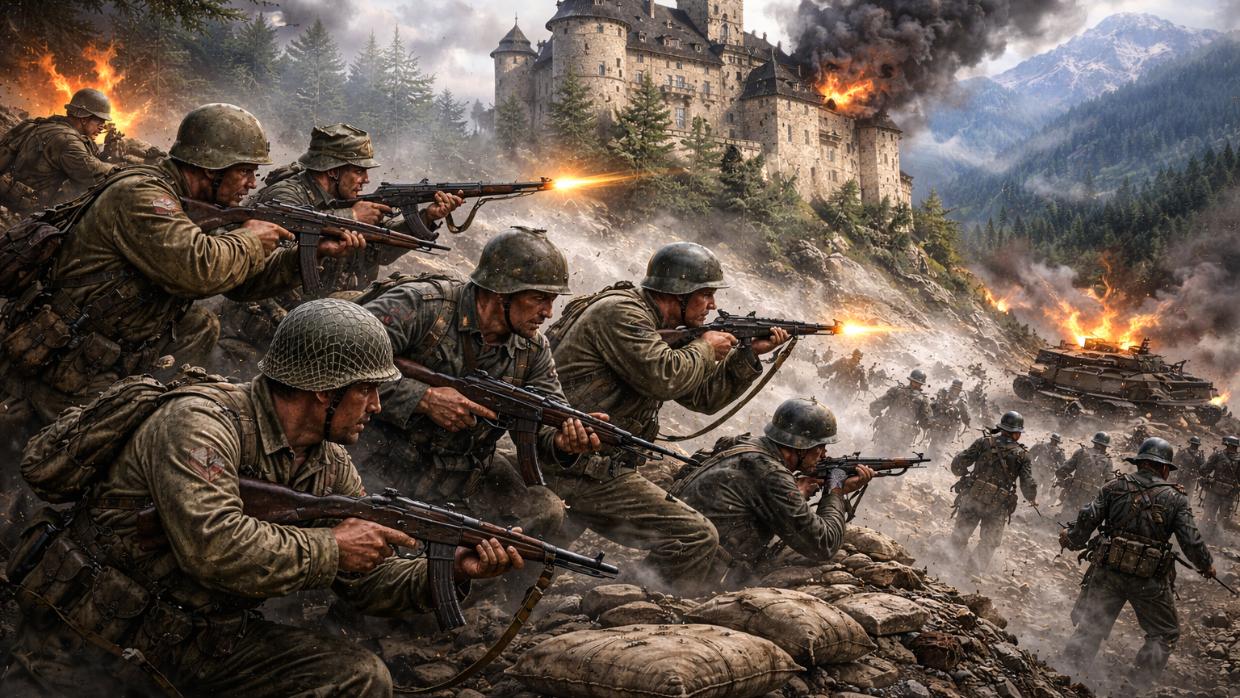
In the final days of WWII, one last, improbable battle unfolded inside a medieval castle where American soldiers and German defectors fought side by side against SS troops.
By late April 1945, Hitler was dead, Germany was collapsing, and surrender was just days away. The Red Army was driving in from the east, Italy had fallen in the south, and Western Allied forces were pushing into Tyrol from the west. World War II was in its final breaths.
What remained of the shattered German army flooded back into Austria. Tyrol filled with the last die-hard Wehrmacht and Waffen-SS units, troops whose mere presence discouraged others from surrendering.
Yet on May 5, 1945, in a surreal twist at a medieval castle, U.S. troops and German soldiers joined forces to battle SS diehards and save hostages from execution in what may have been the strangest showdown of the entire war.
Built in the 1200s and reshaped over centuries, Itter Castle (Schloss Itter) rose from the Tyrolean Alps in Austria as a classic medieval stronghold, until its story took a darker turn. After Germany annexed Austria, the castle was leased from its owner in late 1940. In 1943, the SS seized the hilltop fortress and converted it into a prison for high-profile French captives.
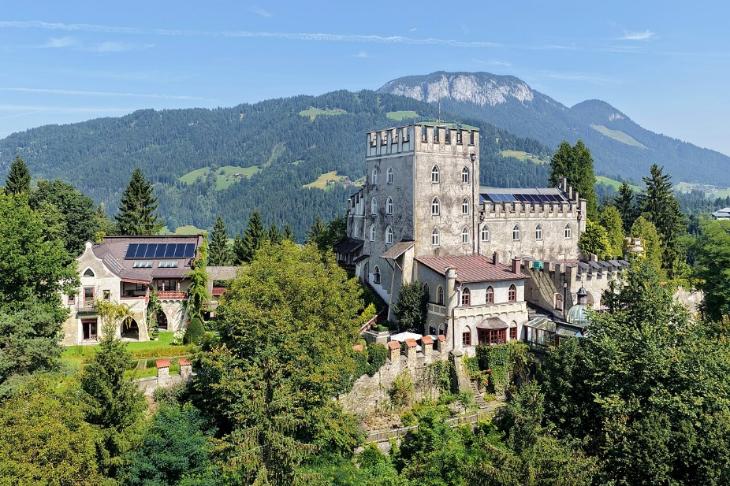 Itter Castle, in 2025 photo by C.Stadler/Bwag, Wikipedia
Deep in the German heartland and administratively tied to the Dachau concentration camp, the castle’s natural defenses made it an ideal place to hold political prisoners the Nazis considered especially valuable.
The inmates were VIPs and pillars of France’s political and military elite: former prime ministers Édouard Daladier and Paul Reynaud; generals Maurice Gamelin and Maxime Weygand; right-wing leader François de La Rocque; trade union chief Léon Jouhaux; tennis champion Jean Borotra; Georges Clemenceau’s son; and Resistance member Marie-Agnès de Gaulle, sister of Charles de Gaulle. Alongside them were several Czech and Yugoslav partisans. Many had been imprisoned for nearly two years, held as potential bargaining chips.
By early May, tension hung thick over Itter Castle. The French prisoners were convinced the SS would kill them rather than allow them to fall into Allied hands. Their fears deepened on May 4, when Dachau’s final commander shot himself and the SS officer overseeing the castle vanished. Suddenly, the fortress stood deserted.
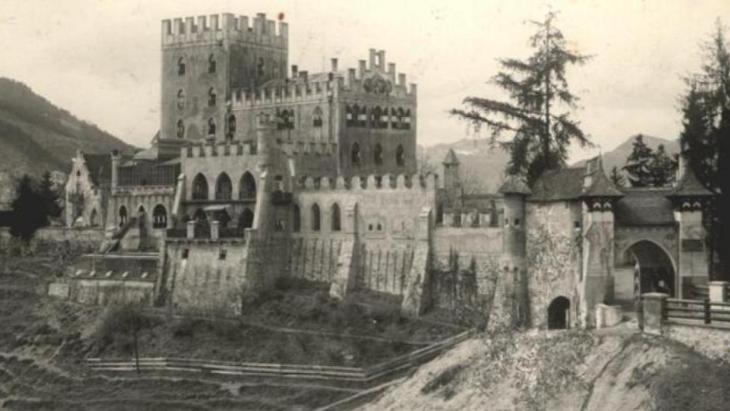
Reynaud and Clemenceau ventured into the nearby village but quickly retreated. The roads were crawling with SS patrols erecting roadblocks and machine-gun nests. Back inside the castle, the prisoners realized they were still trapped and time was running out.
First, they stitched together a French tricolor and hung it inside the castle as a silent plea to any Allied aircraft overhead.
Next, they sent out two messengers.
The first was Yugoslav resistance fighter Zvonimir Čučković. Bluffing his way past guards by claiming the castle commander had sent him to town to retrieve electric lights, he dodged SS patrols, seized a bicycle, and pedaled off, only to fail in finding help.
The second messenger succeeded. Czech cook Andreas Krobot carried a handwritten note explaining the prisoners’ dire situation and rode to the nearby town of Wörgl. An SS patrol nearly captured him until a stranger pulled him into a house and saved his life.
That stranger was Major Josef Gangl, a battle-scarred Wehrmacht officer who had quietly turned against the Nazis.
Major Josef Gangl had fought for Nazi Germany from Stalingrad to Normandy but had grown utterly disillusioned with the regime. Already working with the Austrian resistance, Gangl chose to openly defy the SS and protect the French prisoners.
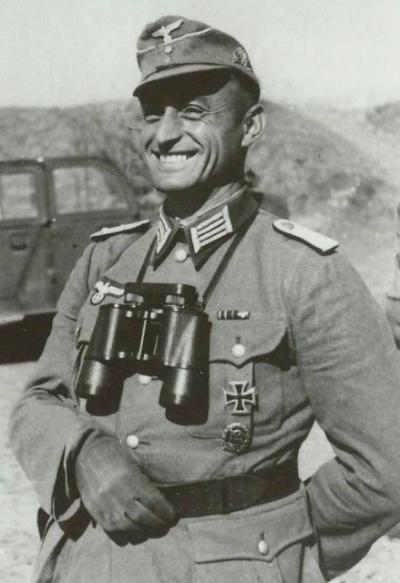 Major Josef Gangl
But with only about 20 loyal soldiers, he knew he could not defend the castle alone.
How men like Gangl broke their oath and earned the resistance’s trust remains difficult to pin down, but none of that mattered now. Gangl, Krobot, and members of the Austrian underground raced toward advancing American forces.
A few miles later, their jeeps skidded to a halt in front of several Sherman tanks. Gangl, still in full German uniform, stepped out with hands raised, waving a white flag.
He was brought to Captain John C. “Jack” Lee Jr., a 27-year-old New Yorker commanding a small Sherman tank unit. Lee was a former high school and college football star and, by all accounts, a rough-talking, hard-drinking, bull of a man.¹ One account describes Lee chomping on an unlit cigar when Gangl arrived.
After hearing the story of the imperiled castle and its prisoners, Lee radioed headquarters, received a quick green light, and immediately declared a rescue mission.
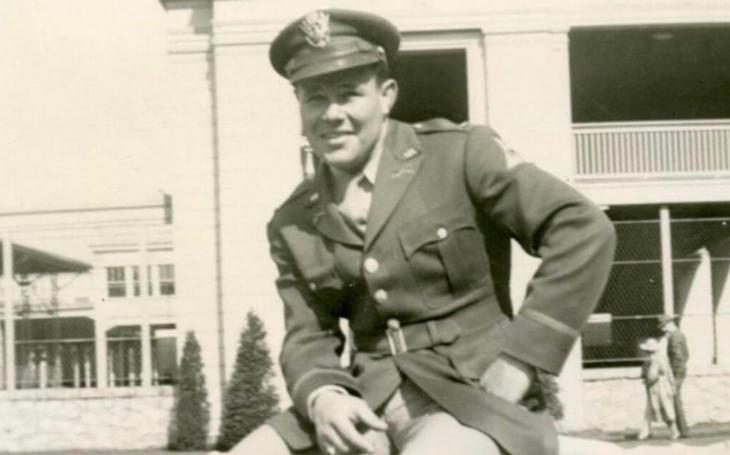 Capt. Jack Lee
He assembled five tanks, but a shaky bridge forced most to turn back. Lee pressed on with 14 American soldiers, a single Sherman tank, Gangl, a driver, and a truck carrying ten former German artillerymen.
Just four miles from Itter Castle, they smashed through an SS roadblock and continued toward the fortress.
When they arrived, one of the war’s most improbable scenes unfolded: an American captain and a German army major stood together planning how to defend French hostages from die-hard Nazis.
Lee’s men were lightly armed with mostly rifles and submachine guns, but the lone Sherman guarding the gate offered some reassurance. As Waffen-SS trucks armed with anti-tank guns closed in, Lee sent the French prisoners deeper into the castle while Americans and Germans manned the walls.
Reinforcements were desperately needed. Until then, they would have to hold.
The Waffen-SS were the Nazi Party’s elite paramilitary force. The attackers who converged on Itter Castle on May 5, 1945, were committed remnants of the 17th SS Panzergrenadier Division, still willing to fight as Germany collapsed around them.
Numbering roughly 150–200 men and supported by flak and anti-tank guns, they advanced on the castle to kill or recapture the French VIP prisoners before liberation.
At 4:00 a.m., gunfire jolted Captain Lee awake as an MG42 raked the gatehouse and the American tank thundered in reply. SS troops attempted to scale the western wall using grappling hooks, but fire from the American-German defenders held them back.
By midmorning, the real hammer fell. An 88mm gun and a 20mm cannon opened fire, shaking the castle and tearing chunks from its walls. When the Sherman tank guarding the gate finally erupted in flames, the French VIPs themselves grabbed weapons and joined the fight.
Reynaud fired from a window. Gangl rushed to assist him and was cut down by a sniper.
With the radio destroyed and SS troops closing in, Lee used the castle telephone to beg the resistance for help, just before another shell severed the line.
Ammunition was running dangerously low.
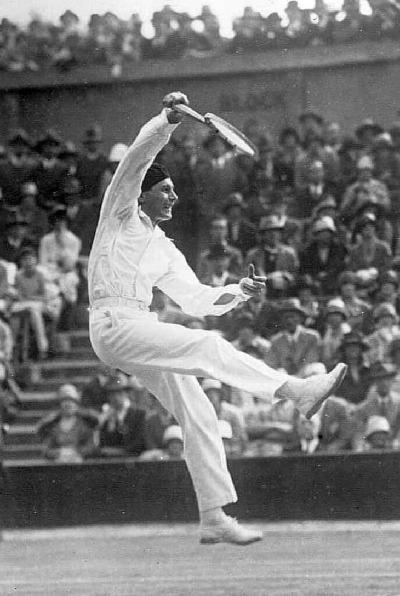 French prisoner and tennis star Jean Borotra
In one of the most astonishing moments of the battle, French prisoner and tennis star Jean Borotra volunteered to vault the castle wall, likely a 2–3 meter (6–10 foot) drop. and sprint through a maze of enemy soldiers to seek help.
Lee hesitantly agreed.
Borotra made it through unscathed, requested a uniform, and joined a resistance column advancing toward the castle just as the defenders were nearing their last rounds.
By early afternoon, the 142nd Infantry Regiment consisting of National Guard troops from Texas and Oklahoma received the call. A relief force was dispatched.
Just as the gatehouse was about to fall, heavy machine-gun fire tore into the attackers. Reinforcements had arrived.
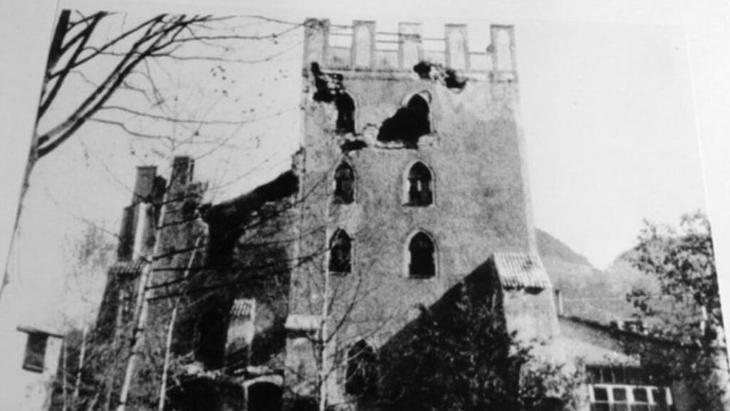 Itter Castle after the assault
With fresh American armor in the fight, the Waffen-SS assault collapsed. Survivors fled into the woods. Nearly 100 SS troops were captured.
Captain Lee received the Distinguished Service Cross. Major Josef Gangl was killed protecting former French Prime Minister Paul Reynaud. Aside from his death, the odd coalition suffered only four other battle injuries.
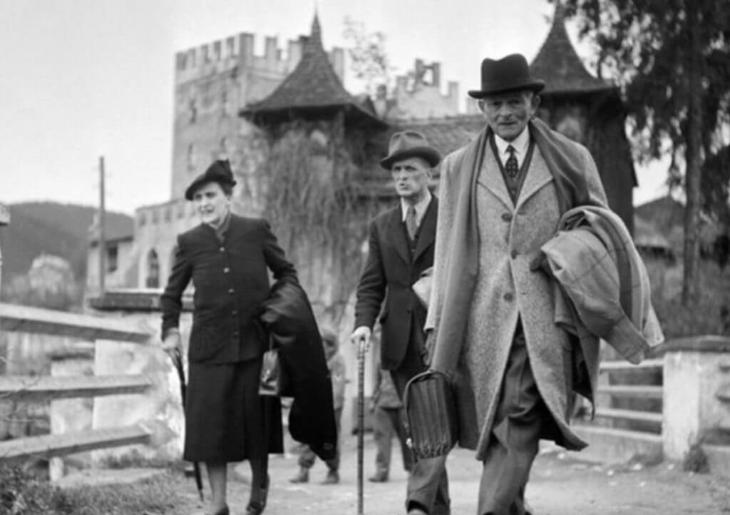 France's Gen Maxime Weygand (right) and his wife leave the castle in this May 1945 photo
Gangl was later honored as an Austrian national hero. He was buried in the nearby town of Wörgl, where a street now bears his name.
The battle occurred just five days after Hitler’s suicide and only two days before Germany’s unconditional surrender.
Sources
Notes








Another piece of history brought to light by Mr. Rich. Very good story.
The article states that the tricolour flag was hung inside the castle. Is this a typo? I’m puzzled as to how it could be seen by passing aircraft if not on the outside.
it had an open courtyard visible from above
Sometimes you read a piece of history and wonder, "How has this not been made into a movie?"
Absolutely! Who should play the French tennis player?
Retrospecting this event adds just a wee bit more to understanding the misery wrought by the dozen years of the Nazi regime. The fact, we recall this, almost eighty-one years afterwards, just goes to show that it will take centuries into the future for Europe, and especially Germany, to cleanse itself of the stain of the worst war in history.
This is a great story, but I don’t understand why the headline writer deems it improbable.
America declared war on Nazi Germany in January 1940. Tens of thousands of American military fought in Europe as well as Asia. German soldiers, like soldiers everywhere under ofers, were required to fight the national enemies. (Differentiate them from the SS and Gestapo, who voluntarily joined those murderous organizations.)
1942.
You’re correct. US declared war on Japan on 12/8/1941. This was followed by declaration of war against the European Axis powers in early 1942. The perils of typing on a phone!