

 Bestselling Author Freida McFadden Reveals Her True Identity


5 min read


5 min read


86 middle schoolers turned Holocaust stories into art. Their work is stunning — and urgent.
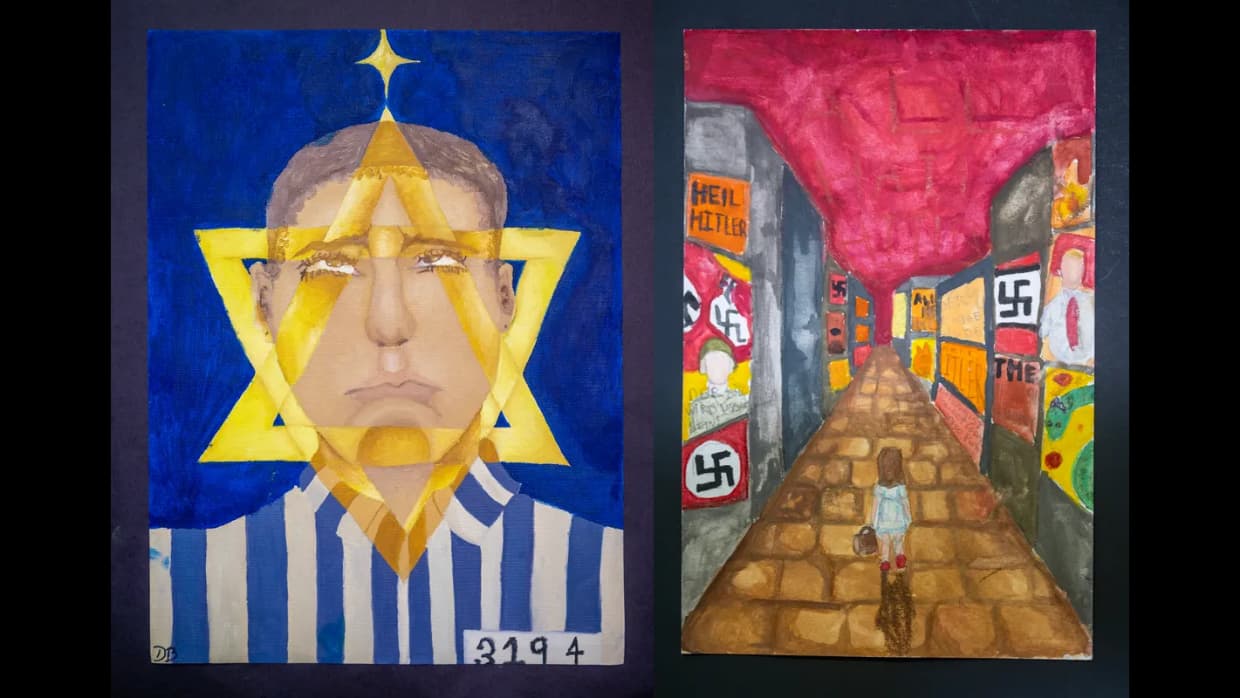
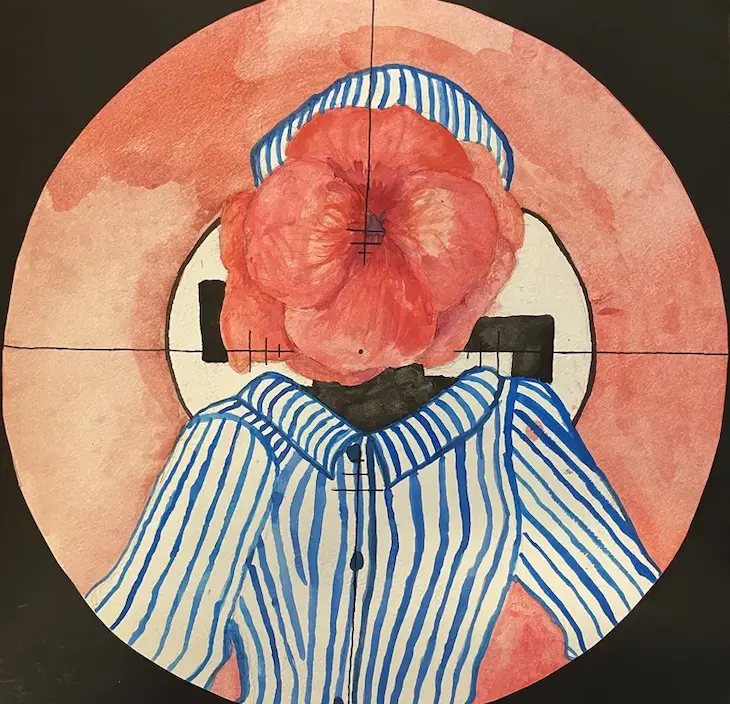
A ballerina dancing for her life in Auschwitz. A red thread tracing the stages of a butterfly’s journey to freedom. A collage about Zionist paratrooper and poet Hannah Szenes. A mixed media canvas about an ancestor who was a Jewish partisan in World War II. A collage showing bread smuggled by small children through the walls of a Jewish ghetto. Rosary beads symbolizing how Jewish girls passed for Catholics to save their lives. A diary by a teenage boy struggling with hunger and family strife in a Polish ghetto.
These images are among 86 original works that middle school students in Tennessee and Mississippi created for the Memphis Jewish Federation’s 17th annual Holocaust Art Competition. Whether paintings, drawings, collages or sculptures, all are interpretations of the 2026 theme, “Art as Memory: Keeping the Stories Alive.”
“The purpose is to expose students to the Holocaust through the medium of art, which is a universal language,” says Lorraine Wolf, community impact manager for Jewish Community Partners in Memphis, the umbrella group that includes Federation. “Students can absorb the lessons of the Holocaust and convey the themes through art.”
Student artists in grades 5 through 8 represented 12 middle schools, including two Memphis Jewish day schools as well as secular public and private schools.
First-place winner Esther Zhang, a 13-year-old seventh-grader at White Station Middle School in Memphis, created a powerful, intricate piece about painter and writer Samuel Bak, a Holocaust survivor born in 1933 in Vilna, which was transferred from Poland to Lithuania after World War II began.
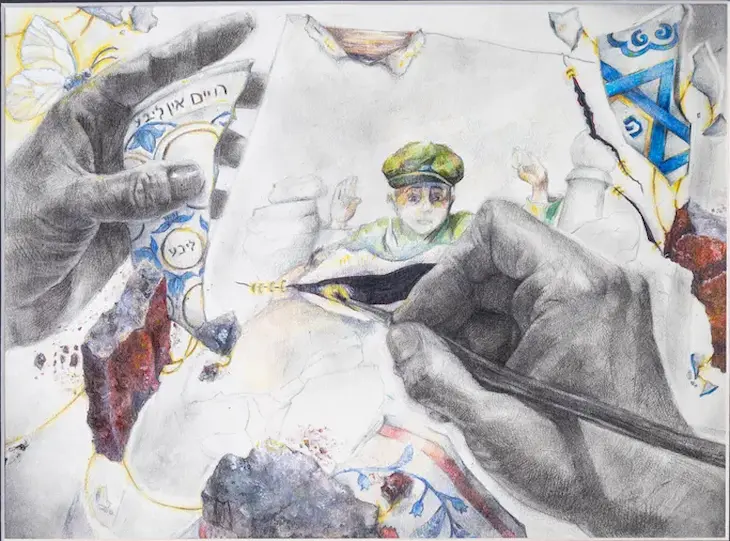
The public school student depicted Bak’s hands at work, explaining: “The right hand holds a paintbrush trailing golden-white threads that stitch together pieces of ceramic and brick. The threads simply repair—visible, intentional work that respects the damage it bridges. The left hand grips a fragment of ceramic, steadying the ruins so the other hand can mend them. The bricks represent the walls and houses that once stood in the Vilna Ghetto, Bak’s childhood home, and then fell. The ceramic symbolizes Passover plates and pottery—the shattered domestic and religious life of Eastern European Jewry. Together, the hands perform the dual work of the survivor: to remember and to rebuild. The mending does not pretend the destruction never happened. The golden threads honor the cracks, reflecting the Jewish concept of tikkun—repair as transformation, not erasure.
“This piece reflects Bak’s life work: taking the fragments of a destroyed childhood and assembling them into a visual language that speaks across generations—what Bak himself called ‘speaking about the unspeakable.’ “
Zhang first learned about the Holocaust in school through books and documentaries, and later through her research about Bak and Anne Frank for class projects. “It’s important to remember the Holocaust today because it reminds us where prejudice can lead,” she told Aish.com. “Remembering helps us stand up against antisemitism and other forms of hatred, and it honors the victims and survivors. It's especially important to me as an Asian-American. There’s so much hate going around today—including anti-Asian violence. It's not just about the past; it's a warning for all communities.”
Like Zhang, fellow artist and second-place winner Ingrid Bergman believes in the importance of keeping memories of the Holocaust alive. A 14-year-old eighth-grader at University School of Jackson, Tennessee, a private nondenominational college preparatory school, she learned about the Holocaust growing up in Poland. “It is important to remember the Holocaust today,” Bergman declares, “because it is one of the most tragic events in history. Many lives were lost, and it is important to honor the victims of the Holocaust to make sure history will not repeat itself.”
Bergman’s piece is a sculpture, “The Secret Annex,” that Anne Frank’s story inspired. Small clay figures surrounding the platform represent Jewish prisoners. At the center is The Diary of Anne Frank, a symbol of one voice that managed to be heard while millions were silenced in the Holocaust.
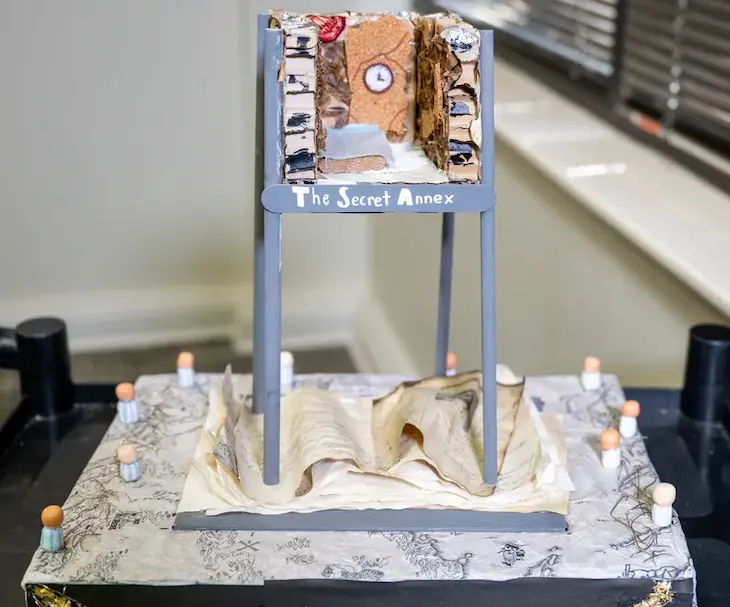 The Secret Annex
“The Secret Annex placed above it represents both hiding and hope. My message is that even in the darkest moments, stories like Anne Frank’s remind us of humanity, resilience and the need to stand against hatred,” says Bergman.
“I used a black base to represent loss and mourning, while the gold flakes symbolize the value and dignity of the lives lost. The wire wrapped around the gold represents a better life and a goal. The goal is caged in by metal wire that shows their goals being denied. The Annex lifted above the diary shows how the stories continue to stand and be remembered today. Overall, my piece highlights the importance of remembering this tragic event and encourages people to learn more about the Holocaust and honor the lives lost.”
Lorraine Wolf at Jewish Community Partners agrees we must keep history alive. “Part of Holocaust education is teaching the past so that people stand up against hatred and the same situation doesn’t happen again,” she says.
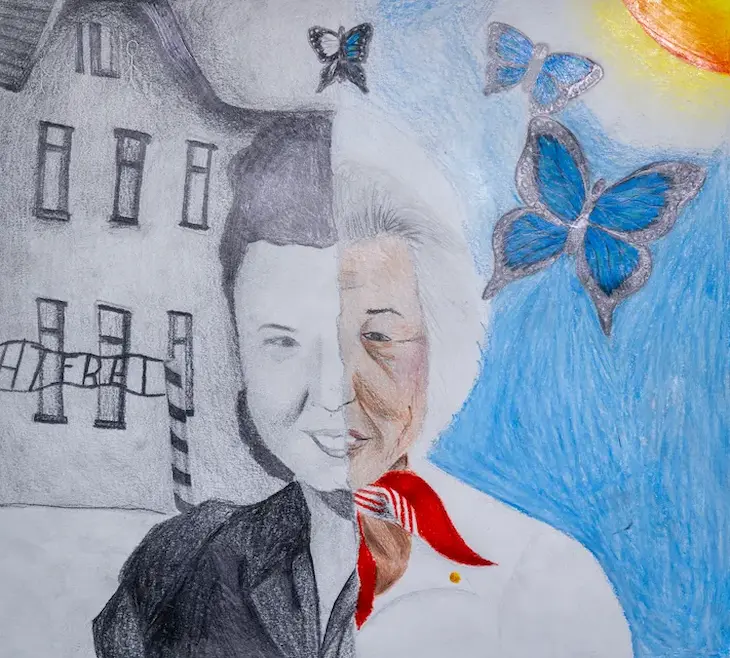
The young artists not only are students, they serve as teachers as well. They have used their talent to show moments of courage, express moments of loss, depict moments of connection, capture moments of survival, portray moments of silence, reflect moments of liberation, honor moments of remembrance, illustrate moments of legacy, reveal moments of truth and inspire moments of hope—the rebuilding of life, the triumph of humanity, and the promise of “Never again!”